
QSITS
First principles. Structural ingenuity.
QSITS Quorum Consulting
We identify the pressures your organization will face next and model the possible paths your decisions create.

Logos
Clarity
Archē
Stability
Praxis
Efficiency
Telos
Direction
C
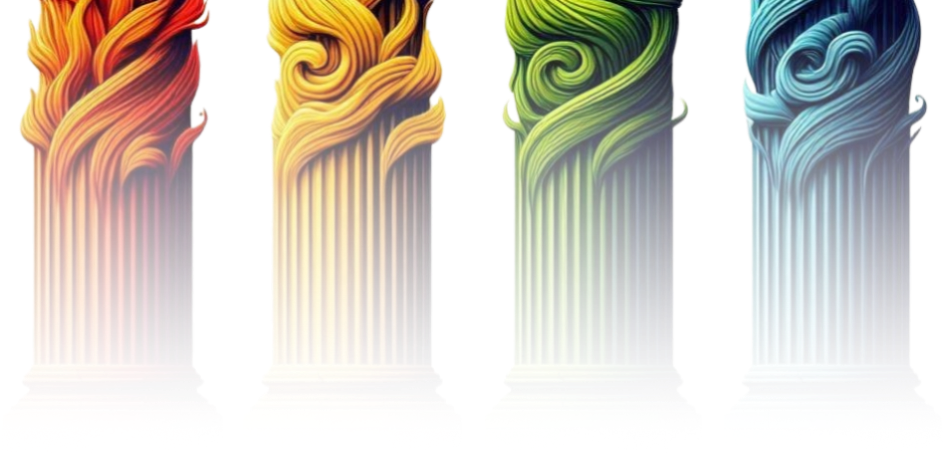
What QSITS Does
Technology is not your problem or your opportunity. Nor is it your organizational profile, persona, or reputation. It is not external or internal relationships. It is not liquidity or leverage.
It is logos, ethos, pathos, and visio.
In an ever-changing world, strengths are rewarded and weaknesses are amplified. Complexity increases. Clarity does not.
AI, capital, talent, and markets do not create discipline. They magnify what already exists.
QSITS works at the structural layer — where authority, incentives, capital, and execution either align or fracture.
We identify where pressure is accumulating, where friction is hiding, and where optionality is being lost.
The result is not more technology.
It is the structural advantages of logic, trust, values, and vision.
We begin at first principles and expose what is misaligned, malformed, or missing. QSITS models ranked future states under change or stasis, restoring structural coherence before correction is imposed by circumstance.
The result is clearer decisions.



Organization Self Transformation Success Rate
Organizations Needing to Transform Every 2-5 Years
20-25%
Outcomes Follow Structure
75-80%
Based on widely cited transformation research (MIT Sloan, McKinsey).
Where Structure Made the Difference


The QSITS Engagement Quorum


I
Assessment
We begin by mapping your existing structure and declared direction.
We collect:
-
Goals and objectives
-
How decisions are made
-
Where authority sits
-
Structural constraints
-
Incentive alignment and conflict
Before movement, we establish ground truth.
II
Alignment
Major decisions rarely fail from lack of analysis.
They fail from misalignment.
We clarify:
-
Existing roadblocks
-
Where finance, operations, risk, and growth diverge
-
Structural tensions
-
What must be reconciled before action
Alignment precedes modeling.


III
Architecture
We model the consequences of competing paths before commitment.
You receive:
-
Primary and alternative paths
-
Convergence points
-
Failure risks
-
Probable outcome ranges
-
This is not forecasting.
It is consequence mapping.
IV
Navigation
We plot your chosen path forward.
You leave with:
-
Clear sequencing
-
Governance guardrails
-
Defined risk thresholds
-
Execution clarity
Implementation remains yours.
Clarity remains intact.